The iPhone 18 Pro makes its strongest argument through camera flexibility and demanding creative work, not the assumption that every newer chip transforms everyday use. This iPhone 18 Pro review examines what its A20 Pro processor, variable-aperture camera and battery specifications actually mean for buyers.
This is a desk-researched assessment, not a hands-on test, based on Apple’s published specifications, purchasing information and testing disclosures. No benchmark runs, sample photographs or battery measurements were produced for this review; manufacturer claims are identified separately from conclusions about buying value.
Price, Size and Everyday Practicality
Apple’s US store lists the iPhone 18 Pro from US$1,199, with 256GB as the starting capacity. That is a US reference price, not a worldwide quotation; compare local taxes, warranty terms and storage pricing before judging competing offers.
The Pro has a 6.3-inch OLED display and weighs 211 grams. The 6.9-inch Pro Max weighs 249 grams, making the smaller model the more manageable option on paper, though neither size specification establishes how comfortable it will feel in a particular hand.
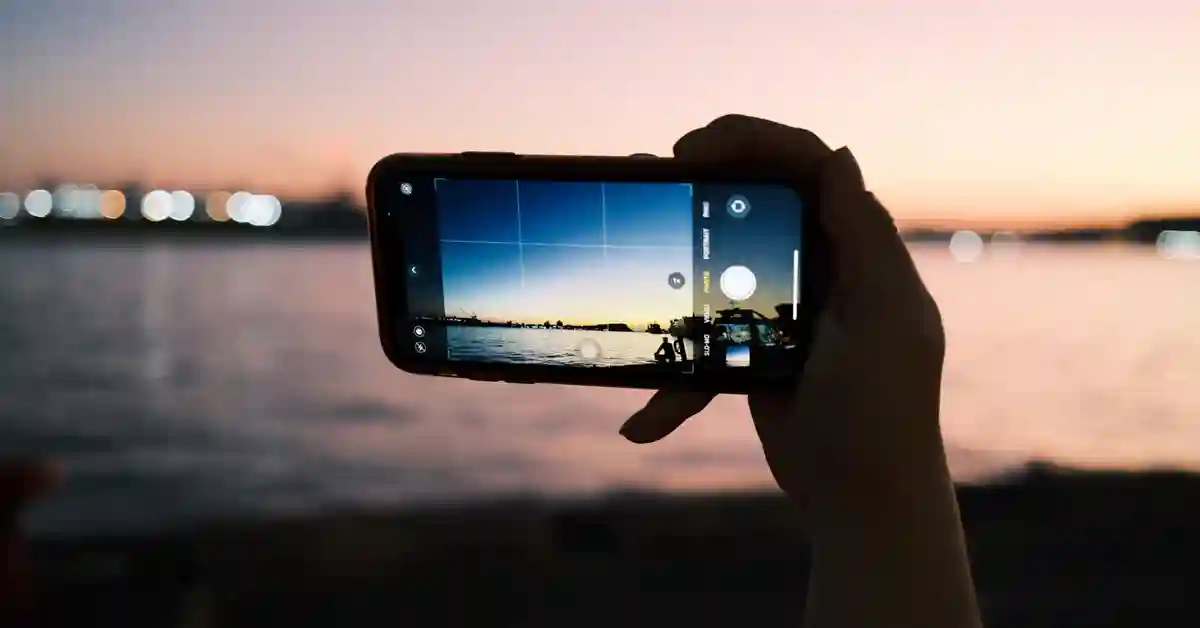
Illustrative photo; not the reviewed model. Photo: Hank / Pexels.
Adaptive refresh rates up to 120Hz support fluid scrolling, while Apple specifies outdoor peak brightness of 3,000 nits. Peak brightness is not a promise of sustained full-screen output, especially during hot-weather navigation or recording.
A20 Pro Performance and Thermal Limits
Apple’s technical specifications list an A20 Pro with a six-core CPU comprising two super cores and four efficiency cores. It also has a seven-core GPU with Neural Accelerators, hardware-accelerated ray tracing and a dual 16-core Neural Engine.
Those components describe capabilities, not measured speed. Without comparable benchmark runs, there is no defensible percentage improvement to quote, and core counts alone cannot establish faster exports, smoother games or better efficiency than another phone.
Where the Chip Matters Most
The relevant workloads are sustained gaming, high-resolution editing and repeated video exports. For messaging, banking and browsing, an upgrade decision should start with shortcomings in the existing phone rather than theoretical processing headroom.
Thermal behavior remains an important unanswered question. Apple’s materials disclosure references a vapor chamber chassis, but that does not demonstrate surface temperatures or performance after twenty minutes of demanding use.
A useful independent test would repeat the same workload at controlled ambient temperature and track frame rates, brightness and battery drain. Until comparable evidence is available, claims that the Pro stays cool or never throttles would overstate what this research establishes.
Cameras: Useful Controls, Unproven Results
| Camera or Setting | Listed Capability | Buying Caveat |
|---|---|---|
| Main camera | 48MP; variable aperture at f/1.48, f/1.8, f/2.8 and f/4.0. Manual aperture, shutter speed and white balance controls, plus a histogram. | More control does not establish better image quality without controlled samples. |
| Ultrawide | 48MP. | Judge image quality from samples, not resolution alone. |
| Telephoto | 48MP; 100mm-equivalent, native 4x lens. | The native lens is distinct from the additional 8x setting. |
| 8x setting | Apple’s “optical-quality” setting produces 12MP images. | Not a separate native 8x optical lens. |
| 40x digital zoom | Advertised digital framing option. | Not evidence of detailed distant photographs; inspect full-resolution examples before paying more for zoom alone. |
Variable aperture is a meaningful tool because it changes how much light enters the lens and affects depth of field. A wider setting can help when light is limited, while a smaller opening can provide more depth of field for subjects at different distances.
That flexibility does not automatically deliver cleaner night photographs or sharper groups. Sensor behavior, processing, subject movement and diffraction still matter; this review cannot rank image quality without examining controlled samples.
Understand the Zoom Labels
The distinction that matters is the native lens versus an additional zoom setting. The table separates the 4x telephoto lens from Apple’s 8x “optical-quality” label and 40x digital zoom so the three are not treated as equivalent capabilities.
Video Features Carry Workflow Costs
The main camera supports 4K Dolby Vision at up to 120 frames per second. ProRes recording reaches 4K at 120fps with external recording, while ProRes RAW requires compatible apps and Genlock requires compatible third-party hardware and software.
These are practical distinctions for filmmakers, not interchangeable modes available under every condition. Budget for storage and accessories, and confirm that an editing application supports the intended format before treating professional recording features as a purchase justification.
Storage options extend to 2TB, but capacity should follow the workflow rather than the most expensive configuration. Check current photo and video storage, allow room for apps, and decide how frequently footage will be transferred or backed up.
USB-C supports USB 3 transfers up to 10Gb/s, but Apple requires a suitable 10Gb/s cable for that speed. A charging cable and a high-speed data cable are not necessarily interchangeable, making cable selection another detail worth checking for frequent video transfers.
Battery Life: Keep Pro and Pro Max Separate
| Model and Test | Claimed Maximum | How to Read It |
|---|---|---|
| iPhone 18 Pro: typical use | Up to 24 hours | Active and passive tasks in a representative profile on preproduction devices; not a video-only test. |
| iPhone 18 Pro: video playback | Up to 36 hours | A separate controlled movie-playback test, not typical use or everyday screen-on time. |
| iPhone 18 Pro: streamed video | Up to 33 hours | A separate streamed-video figure, not interchangeable with video playback. |
| Pro Max: video playback | Up to 45 hours | Pro Max only; do not apply this figure to the smaller Pro. |
Apple’s typical-use assessment combines active and passive tasks using a representative profile on preproduction devices. Its separate video tests repeatedly play specific movies with controlled settings, so neither figure is equivalent to measured screen-on time in everyday ownership.
The battery proposition therefore looks promising, but an all-day verdict remains conditional. Weak reception, outdoor brightness, navigation, gaming and recording can produce a very different workload from Apple’s published tests.
Charging Requires the Right Equipment
| Method | Published Claim | Equipment and Limits |
|---|---|---|
| Wired USB-C | Up to 50% in around 15 minutes. | Suitable 60W-capable adapter or higher, USB Power Delivery 3.1 or better with Adjustable Voltage Supply (AVS), and a 60W-capable USB-C cable. Wattage alone is not enough. |
| MagSafe / Qi2 | Rated up to 25W. Apple’s 50% in thirty minutes claim uses a MagSafe Charger. | That timing uses a MagSafe Charger and a 35W-or-higher adapter; it is not a blanket timing claim for every Qi2 setup. |
| Included cable and extra costs | The box lists a USB-C cable, but no power adapter. | Check adapter and cable compatibility separately. A suitable 10Gb/s data cable is also required for the advertised USB 3 transfer speed. |
This does not mean the phone continuously draws 60W or reaches full charge in thirty minutes. Apple tested drained preproduction units, and actual charging depends on settings, usage, equipment and environmental conditions.
Charger compatibility belongs in the total cost, not just the headline charging time. Confirm the required adapter and cable before buying accessories; the included USB-C cable listing alone does not establish that every charging or data-transfer requirement is met.
Software, Support and Worldwide Caveats
The phone runs iOS 27, but the reviewed product documents do not establish a fixed final year of operating-system support. Do not turn expectations about longevity into a guaranteed update commitment; local repair access and battery replacement costs also affect ownership value.
Apple’s disclosures describe Siri AI as beta software with language and regional restrictions, including no initial iOS availability in the EU. Some server-based intelligence features have daily limits, and Apple says expanded access will carry a fee in the future.
For international buyers, the US specifications describe eSIM-only operation. Verify the exact local model and carrier support rather than assuming an imported device will accommodate a physical SIM or every advertised network feature.
Verdict: Buy for a Specific Capability, Not the Chip Name
The iPhone 18 Pro is most compelling on paper for buyers who want manual aperture control and advanced video formats without moving to the larger Pro Max. Its trade-offs are a premium starting price, accessory requirements and unresolved questions about sustained performance and real-world endurance.
Owners of a recent, satisfactory Pro should wait for comparable camera samples and battery tests before upgrading.
For an older phone with weak battery health, compare replacement costs first; choose the 18 Pro when its specific creative tools solve a recurring problem, not because untested specifications imply a universal improvement.