This Nothing Headphone 1 Pro review asks whether distinctive hardware makes a convincing everyday headphone, not simply whether three drivers look impressive on a specification sheet. Nothing combines tactile controls, adjustable sound and adaptive noise cancellation with a metal-and-glass design that brings practical compromises.
This is a research-based review, not a hands-on listening test. It draws on Nothing’s published specifications and caveats, with Marques Brownlee’s video providing independent context; we have not measured sound, tested noise cancellation or worn the headphones.
The goal is to separate documented capabilities from performance that still deserves an audition.
Price and What the Package Includes
On November 27, 2026, Nothing’s US storefront displayed a regular price of $399 and a $319 offer. That is a US-dollar snapshot, not a worldwide price or a guarantee of checkout availability. Buyers elsewhere should check local taxes, warranty coverage, stock and current pricing.
The package includes the headphones, a hardshell case with strap loops, a 3.5 mm cable, a USB-C cable and a quick-start guide. The official product page lists these contents alongside the specifications and important limitations. Included wired connections broaden its usefulness beyond Bluetooth listening.
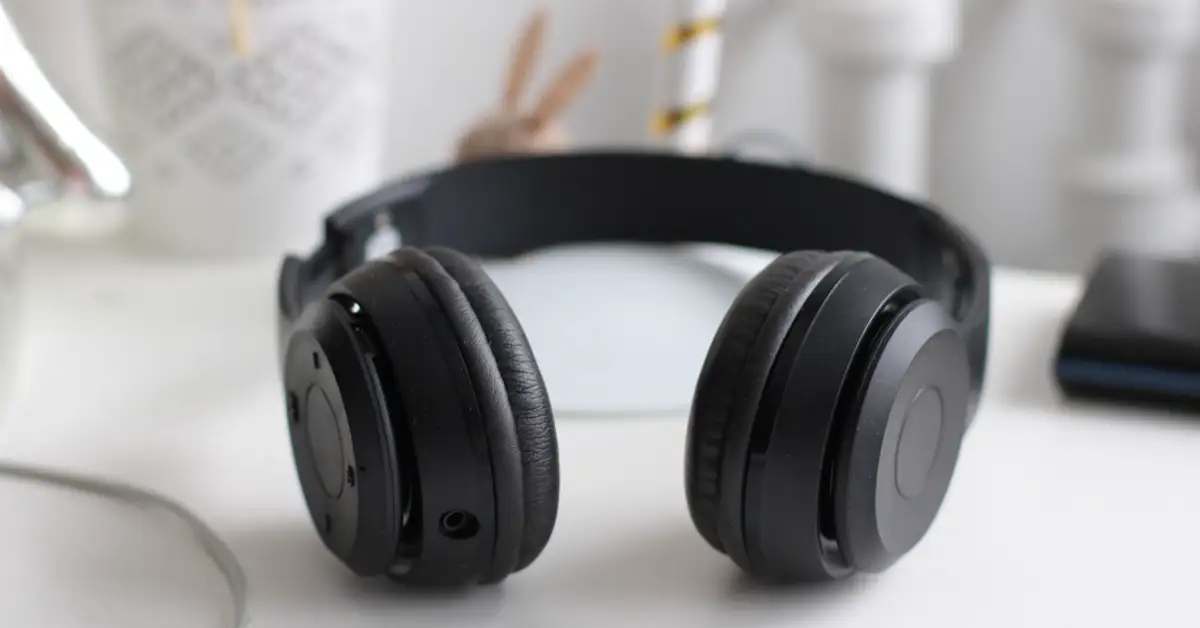
Illustrative photo; not the reviewed model. Photo: Dzenina Lukac / Pexels.
Noise Cancellation Needs More Than a Big Number
Nothing specifies real-time adaptive ANC, ten microphones and cancellation of up to 46 dB. Its footnote calls that figure a theoretical laboratory maximum. It does not establish an average reduction across all frequencies, prove better cancellation than another brand or predict what happens beside a particular airplane seat.
The physical seal matters too. Nothing describes an 8 mm silicone baffle and dual-layer cushions designed to limit leakage. Glasses, hair and cushion placement can change that seal, so an impressive ANC specification cannot replace checking the fit on the person buying it.
Brownlee’s supplied inspiration video praised isolation from office sounds while stopping short of ranking overall ANC above Sony’s competing headphones. That is his reported experience, not our finding or a standardized comparison. Nothing also lists transparency mode and a four-microphone call algorithm; neither guarantees natural ambient sound or clear speech in wind.
Check the Seal Before Judging ANC
Try the headphones with the glasses normally worn and move the head while listening to steady background noise. Check whether isolation changes when the cups shift. Nothing says the cushions are removable and warns that incorrect reinstallation can affect both sealing and ANC, making correct maintenance relevant to performance.
Comfort Gains Still Come With Weight
The headphones weigh 327 grams. Nothing says the cushions are 50% softer than those on Headphone (1), with a 10% wider headband and 12% thicker padding. These are manufacturer comparisons, not evidence that every head shape will find them comfortable for an entire flight.
Softer pads may distribute pressure differently, but they cannot remove the weight. Buyers sensitive to headband pressure should prioritize an extended fitting session rather than a quick store demonstration. Ear clearance, clamping pressure, heat buildup and glasses compatibility remain unverified in this review.
Nothing also identifies nickel, acrylates and cyclosiloxanes in its material warnings. Anyone with relevant known sensitivities should consult those warnings before buying. Softer padding and premium materials do not make a product universally suitable for skin contact.
Metal and Glass Make Design a Practical Decision
Machined aluminum, titanium-alloy arms and transparent glass distinguish these headphones from understated plastic alternatives. Nothing’s claim that the arms are 45% lighter concerns that component compared with Headphone (1), not a 45% reduction in the complete headphone’s weight.
The glass is described as scratch- and shatter-resistant, not indestructible. Nothing explicitly advises avoiding drops onto hard or sharp surfaces. Brownlee also reported fingerprint buildup and criticized the supplied case, including its exposed headband and lack of charging access while closed; those observations should prompt inspection rather than be treated as our durability test.
The IP52 rating has a narrow scope. Nothing’s disclaimer says it is not intended to cover rain, splashes, immersion or excessive sweat. Despite the water-resistance label, these are not an obvious choice for wet-weather running or sweaty workouts.
Three Drivers Expand Options, Not Proof of Better Sound
The architecture combines a 40 mm bass driver, a 13 × 8 mm precision driver and a solid-state xMEMS treble driver. Dividing duties among drivers is a design approach, not a listening verdict. Integration and tuning matter more than counting parts.
Nothing worked with Metropolis Studios on tuning and includes a physical Flat EQ switch. That gives users a convenient route to a profile intended for less coloration, alongside personal sound settings, advanced EQ and spatial audio with head tracking. None independently certifies reference-grade accuracy.
For someone alternating between entertainment and editing, that flexibility is a plausible advantage. For someone who simply wants excellent default sound, the extra modes are less decisive. We cannot confirm bass precision, vocal balance, instrument separation or mixing suitability without listening and measurements.
Connectivity and Controls Are Concrete Strengths
Nothing lists Bluetooth 6.1 and dual-device connection, along with wireless and wired listening options. The connection matters because codec support and the available audio format are not interchangeable.
| Connection | Listed capability | Important limitation |
|---|---|---|
| Bluetooth music | AAC, SBC and LDAC playback | Codec availability depends on the source device. |
| LC3 broadcast | LC3 for broadcast audio | Broadcast audio only; do not assume LC3 works for ordinary Bluetooth music. |
| USB-C wired | Lossless audio up to 24-bit/192 kHz | A high-resolution input does not automatically improve every recording. |
| 3.5 mm wired | Separate analog connection | This is a wired option, not another Bluetooth codec. |
Check the source device’s codec support rather than buying for a logo alone. Nothing X customization supports Android 8.0 and later or iOS 13 and later, with some functionality integrated into Nothing OS.
The roller adjusts volume, handles play/pause and switches noise-control modes with a hold. The paddle skips tracks and can fast-forward or rewind; a separate button invokes the assistant. Dedicated pairing, power and Flat EQ controls reduce reliance on touch gestures, although the layout still needs learning.
Battery Life Depends on Codec and ANC
Battery life changes with the codec and active noise cancellation (ANC). For travel planning, the ANC-on figure is the more relevant starting point, rather than the longest advertised runtime.
| Music codec | ANC off | ANC on |
|---|---|---|
| AAC | Up to 68 hours | Up to 30 hours |
| LDAC | Up to 53 hours | Up to 28 hours |
The headline 68-hour test uses 50% volume, AAC and otherwise default settings in laboratory conditions. Actual endurance varies, and the figures above are manufacturer claims, not verified runtime here.
Nothing lists a two-hour full charge and five-minute charging for up to four hours without ANC or two hours with it. These quick-charge figures are also manufacturer estimates, not results from our testing.
Pros, Cons and the Right Buyer
| Strength | Trade-off to Check |
|---|---|
| Physical controls and extensive sound adjustment | The control layout needs learning; adjustment options do not prove better sound. |
| Dual-device connectivity and included wired cables | Confirm the source device’s codec support. |
| Clearly specified codec-dependent battery estimates | Real runtime has not been independently verified in this review. |
| Distinctive metal-and-glass build | The 327-gram weight, glass care, restrictive water-resistance caveats and case design merit inspection. |
The strongest match is someone who values design and tactile operation while moving between work and entertainment. Buyers prioritizing minimum weight, workout suitability or proven class-leading ANC should compare alternatives and audition before committing.
Verdict: Buy for the Features, Verify the Fit
Nothing Headphone (1) Pro makes its clearest case through useful controls, flexible connections and adjustable listening modes. The observed $319 US offer changes the value calculation, but neither a discount nor the Pro label resolves comfort, case protection or sound-quality questions.
Consider it if those hardware choices match daily habits and a fitting session confirms a stable seal. Without hands-on testing, a stronger claim about sound or noise cancellation would exceed the evidence. Check the current local price and return terms before deciding.